Breaking barriers: a day in the life of the world's fastest supercomputer
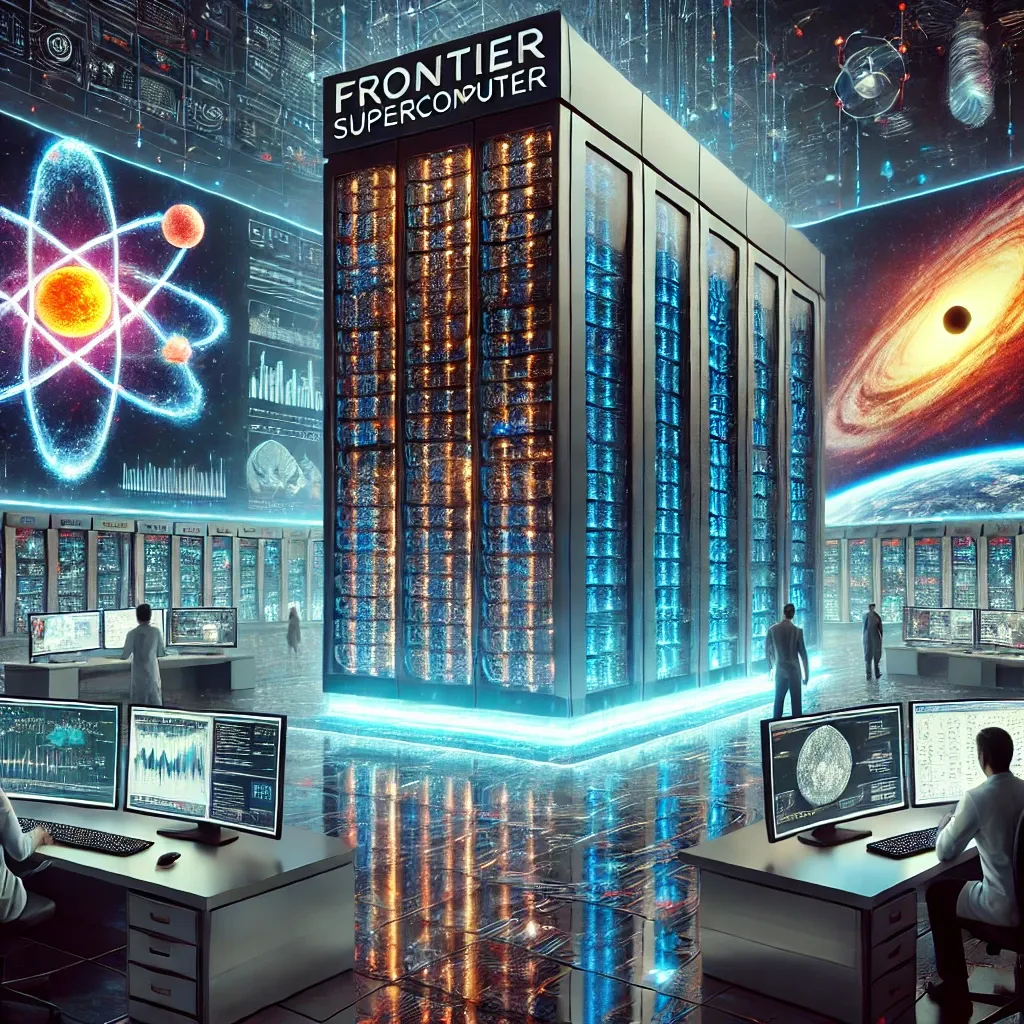
In our rapidly evolving world, the quest for solutions to complex scientific problems resonates now more than ever. From combating climate change to deciphering the mysteries of the universe, the challenges we face are daunting. Enter Frontier, the world's fastest supercomputer, whose exascale computing prowess offers a groundbreaking tool in the fight against these adversities. As the first machine to transcend the exascale speed barrier, Frontier’s capabilities promise unprecedented advancements in scientific research and understanding, paving the way for innovations that could transform society as we know it.
Unveiling Frontier's Exascale Performance
Frontier's success lies in its exceptional speed—over one quintillion floating-point operations per second (1.102 exaFLOPS). This leap in computational power enables researchers to conduct simulations that were previously unimaginable. With its remarkable processing capabilities, Frontier stands as a beacon of technological achievement, redefining what is possible in high-performance computing (HPC).
Scientific Applications: A Deeper Dive
As highlighted in a recent article published in Nature, various fields are already experiencing the tangible benefits of Frontier's capabilities:
- Simulations of Atomic Nuclei: At Oak Ridge National Laboratory, researchers utilized Frontier to investigate the magnetic properties of calcium-48's atomic nucleus. Their findings resolved a longstanding contradiction between experimental data and theoretical predictions, offering fresh insights into the behavior of subatomic particles. This research not only advances our understanding of nuclear physics but also lays the groundwork for future studies on stellar phenomena, particularly in dying stars.
- Astrophysics and Fluid Dynamics: Frontier's power enables the simulation of intricate astrophysical events, including supernovae and cosmic collisions, as well as fluid dynamics at a level of detail that was previously unattainable.
The Role of High-Performance Computing in Scientific Advancement
The advancements brought forth by high-performance computing are pivotal in accelerating scientific discoveries. Frontier’s capability to handle more complex simulations allows scientists to explore intricate systems and gain a more profound understanding of their workings. From fundamental physics and chemistry to environmental sciences, the implications of these insights are vast, leading to potential breakthroughs that could address major societal challenges.
Future Prospects: Transforming Our World
As we look to the future, the promise of high-performance supercomputers like Frontier extends beyond immediate scientific exploration. The tools powered by its extraordinary capabilities could address a myriad of global issues. For instance:
- Climate Change Models: By simulating climate models with unprecedented accuracy, researchers can better predict and mitigate the impacts of climate change, enabling proactive strategies to protect our planet.
- Material Science Innovations: The ability to model material interactions at a fundamental level could pave the way for groundbreaking discoveries in new materials, influencing everything from nanotechnology to energy storage solutions.
- Advancements in Medical Research: Frontier holds the potential to revolutionize drug discovery and genomic analysis, which are crucial in developing effective treatments and personalized medicine for various diseases.
Conclusion
In an era where the complexities of existence are rapidly increasing, tools like Frontier become integral to our ability to understand and navigate our world. Its unprecedented computing power not only represents a pinnacle of technological achievement but also serves as a crucial ally in the battle against some of humanity’s most pressing challenges. Frontier’s innovations may not yield immediate solutions, but the knowledge gained through its simulations will undoubtedly guide us toward groundbreaking advancements that improve our future and enhance the quality of life for generations to come.
For those interested in exploring more about Frontier and its impact on science and technology, check out the article in Nature: A day in the life of the world’s fastest supercomputer.