Harnessing the power of light: giant photocaloric effects in ferroelectric perovskites
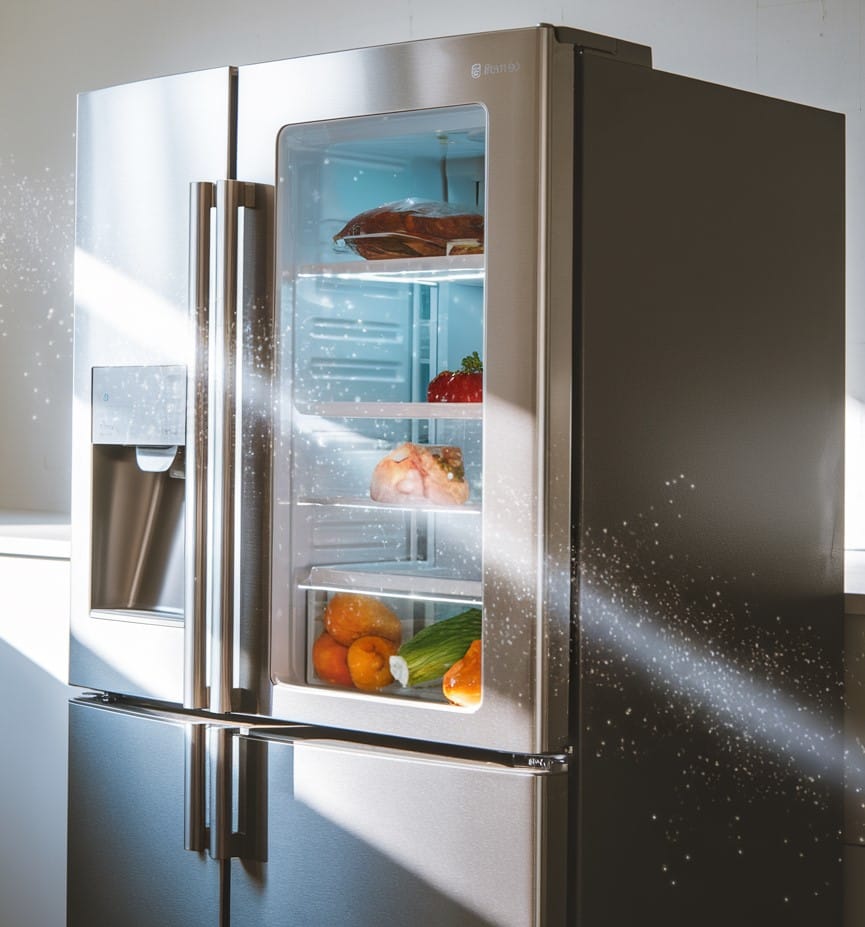
Imagine a world where we cool our houses and refrigeration units without relying on harmful gases or complex liquid systems. This is not science fiction; it's the promise of solid-state cooling—an energy-efficient alternative that harnesses the unique properties of solid materials.
The turning point
One of the most groundbreaking revelations in this field is the discovery of giant photocaloric (PC) effects in ferroelectric perovskites. Recent research by scientists at the Institut de Ciència de Materials de Barcelona and Universitat Politècnica de Catalunya has unveiled this phenomenon, potentially revolutionizing our approach to cooling technologies. Published in the renowned Physical Review Letters, their theoretical study shows that these materials can outperform traditional caloric effects on every level.
What are photocaloric effects?
Photocaloric effects occur when light is absorbed by a material, altering its temperature due to changes in polarization dynamics. The absorbed light changes the material's internal structure, affecting entropy levels and creating significant temperature shifts. This stands in stark contrast to conventional caloric effects, often limited to a narrow temperature range and specific conditions.
A game-changer
Why is this significant? The giant photocaloric effects in ferroelectric perovskites extend across a vastly wider range of temperatures. For instance, unlike conventional materials whose efficiency fades outside specific conditions, ferroelectric perovskites remain effective over a broad temperature spectrum. This extends their practical application potential, opening doors to versatile, real-world cooling solutions.
How it works
The science behind it is both intriguing and highly promising. When light is directed onto ferroelectric perovskites, their polarized state alters, shifting entropy and causing the dramatic cooling effect observed. Unlike traditional methods, there are fewer restrictions, making this a more adaptable and potentially widespread solution.
Why this matters
From keeping our food fresh without harmful refrigerants to reducing the energy required to cool buildings, the implications are enormous. Currently, refrigeration and air conditioning are major contributors to greenhouse gas emissions. Ferroelectric perovskites could revolutionize this, shifting us towards a greener, more sustainable world. This discovery isn't just another scientific paper; it's a beacon for future innovation in an industry begging for cleaner alternatives.
A look ahead
While we're still navigating the early stages, the path forward holds immense promise. The integration of giant photocaloric effect materials into commercial cooling systems could one day become the norm, making sustainable living more accessible to everyone.
In conclusion, this latest research offers not just a glimpse but a fully lit pathway toward eco-friendly refrigerating solutions. Embracing the potential of ferroelectric perovskites could turn the tide against climate change, one fridge at a time.
So next time you adjust your thermostat, think about the incredible potential of photocaloric effects to radically change our cooling technologies. It's an exciting time in materials science, and innovations like these lead the way into an energy-efficient, emission-free future.
For more in-depth insights, you can check the original article:
https://journals.aps.org/prl/abstract/10.1103/PhysRevLett.133.116401